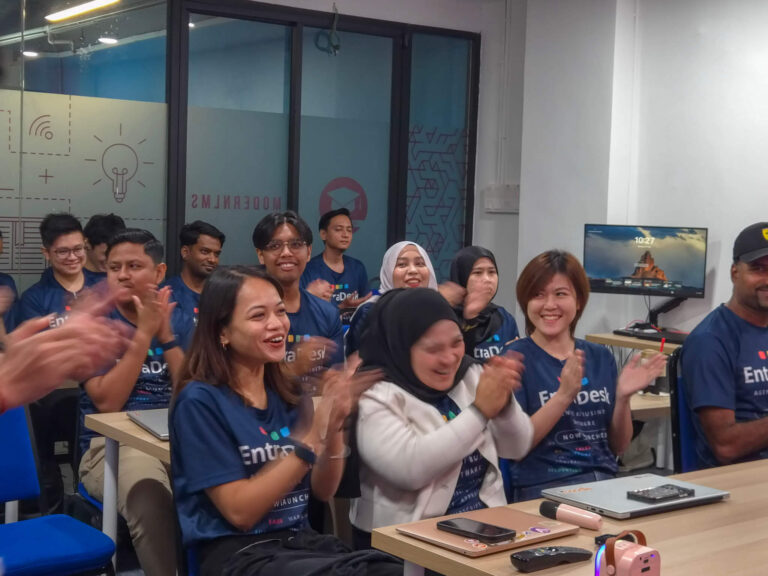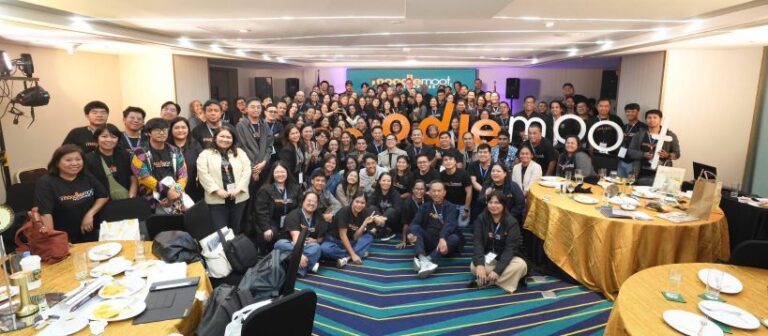

MoodleMoot Philippines 2026 took place on 18–19 June 2026 at Ibis Styles Manila Araneta City in Cubao, Quezon City. Nephila Web Technology Inc. — the only Certified Premium Moodle Partner in the Philippines — organises MoodleMoot Philippines annually as the country’s premier gathering of Moodle educators, developers, administrators, and learning technology professionals. Since 2018, the event has served as a cornerstone of the regional edtech calendar.
ModernLMS participated in MoodleMoot Philippines 2026 as a featured contributor to the event. Sam Suresh, Founder and CEO of ModernLMS, delivered a workshop as part of the Content Development track, while Nicholas Moya, Special Assistant to Sam, attended conference sessions across both days of the programme.
Event Overview
MoodleMoot Philippines 2026 followed a two-day structure, with each day serving a distinct purpose within the overall programme.
Day 1 opened with a morning of parallel workshops across three tracks: Artificial Intelligence, Moodle LMS Implementation, and Content Development. Sessions ran from 9:00 AM through to noon and were designed to be hands-on, immediately applicable to participants’ work contexts.
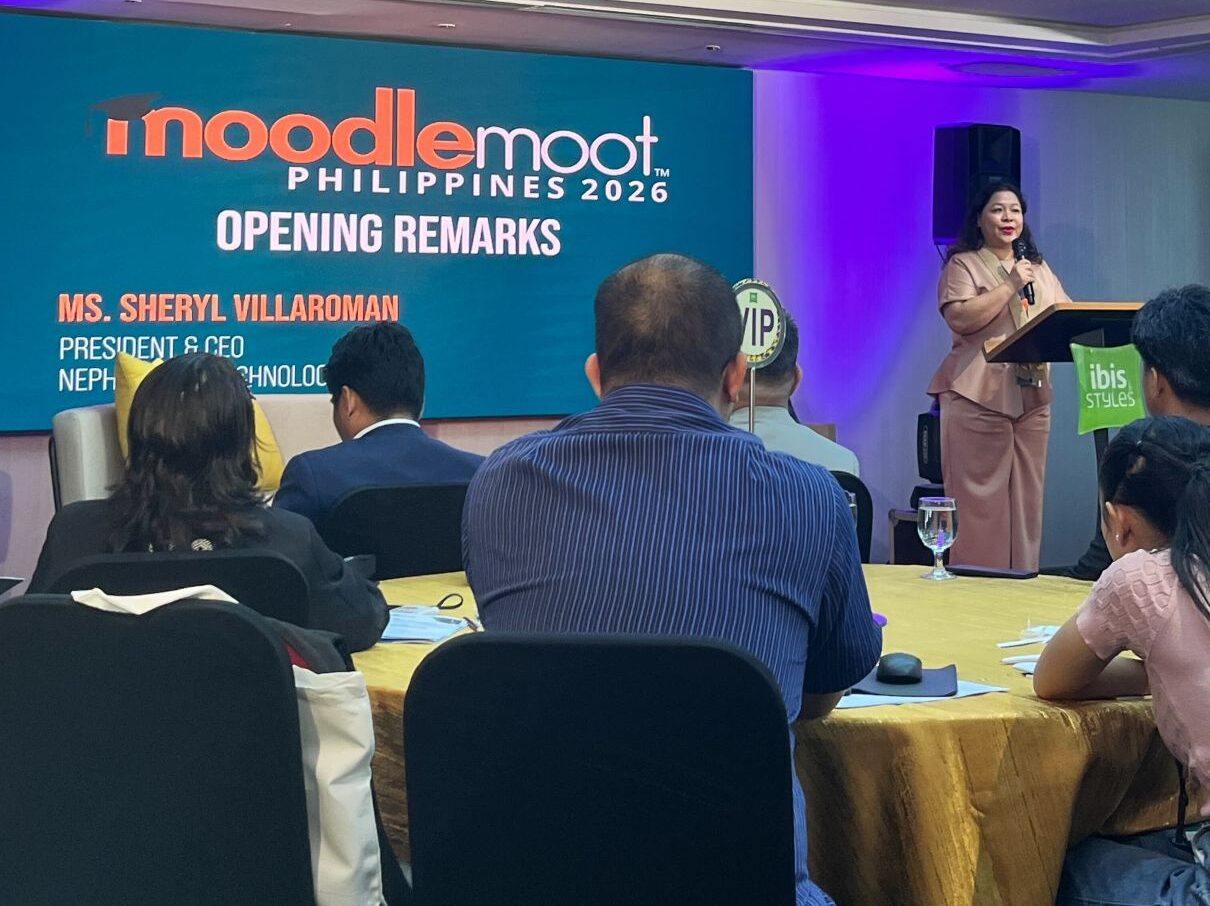
The afternoon of Day 1 transitioned into the formal Conference, beginning with a Welcome Keynote from Sheryl Villaroman, President and CEO of Nephila Web Technology. Dr. Martin Dougiamas, Moodle Founder and R&D Head at Moodle HQ, delivered the headline address on the topic of AI in Education. Further sessions included a presentation from Max Espley of Moodle HQ, a panel on cybersecurity in education, and a preview of the Day 2 programme.
Day 2 comprised a full-day conference with keynote presentations, breakout sessions across the AI, Cybersecurity, and Content Development tracks, and panel discussions on corporate learning. Speakers and participants represented institutions from the Philippines, Malaysia, Indonesia, Micronesia, and other countries in the region. Sheryl closed the event with a ceremonial closing.
Sam Suresh at MoodleMoot Philippines: Building Better Learning Experiences
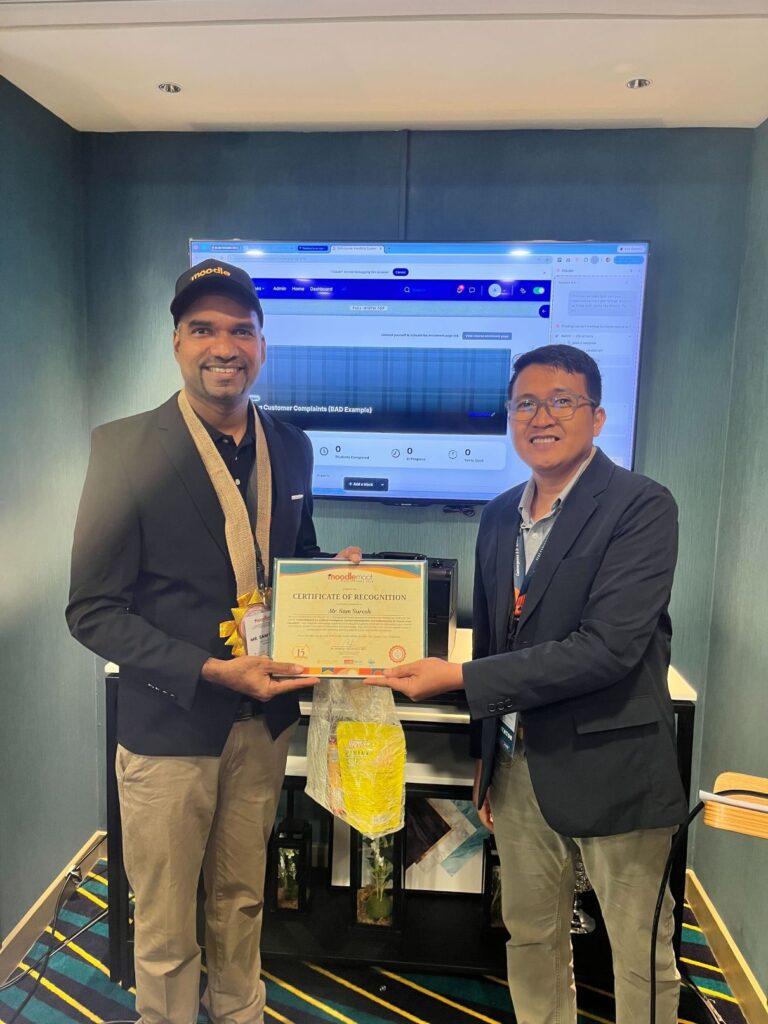
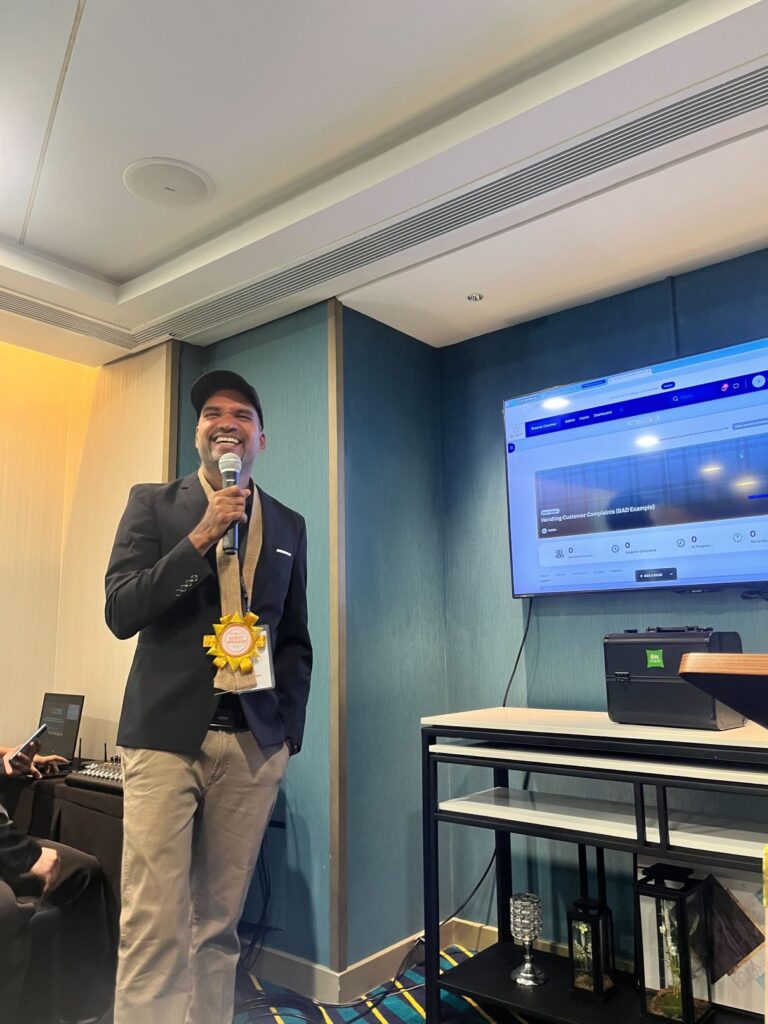
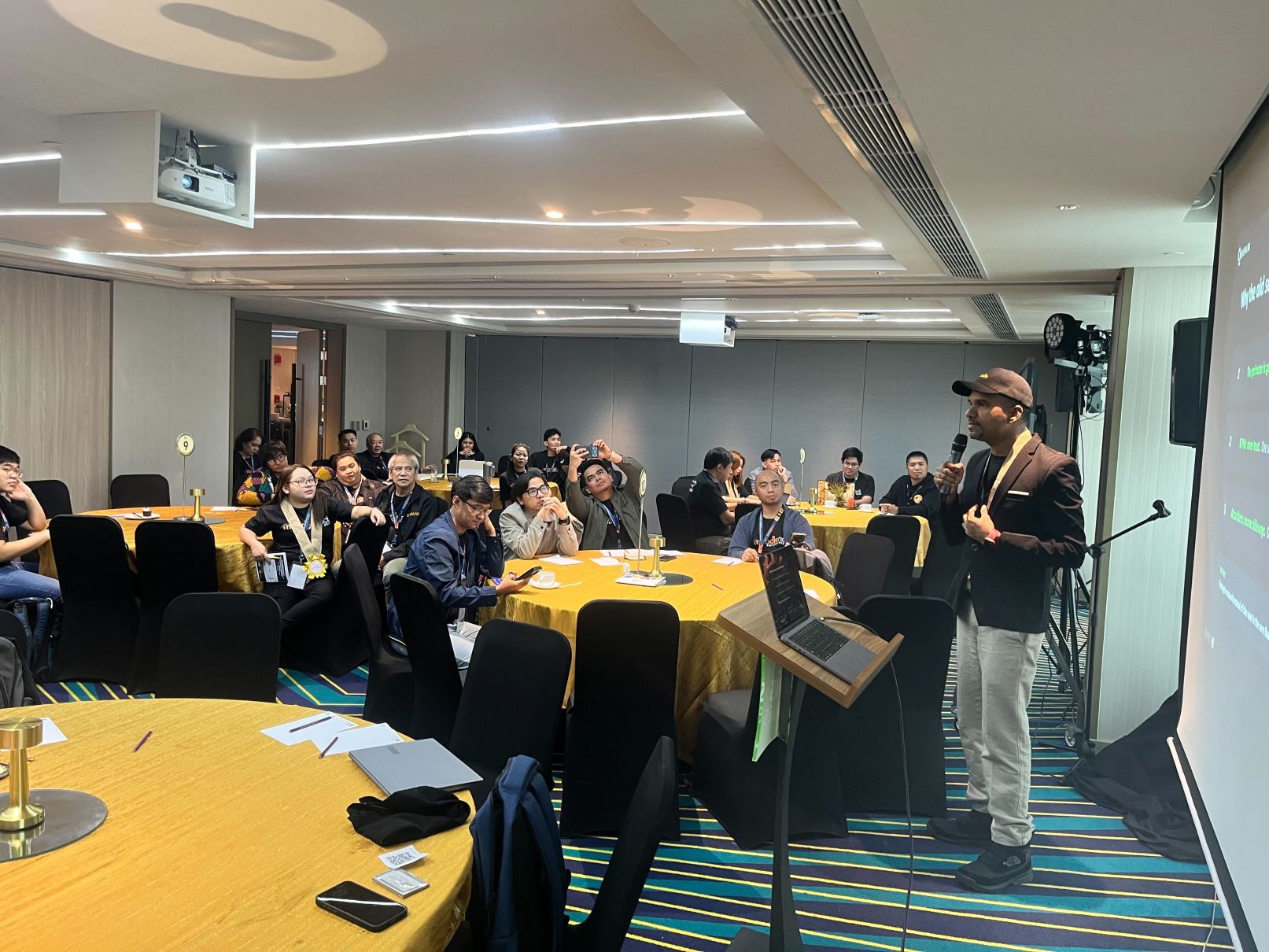
Sam Suresh, Founder and CEO of ModernLMS, was invited to facilitate a workshop within the Content Development track on Day 1. The session, titled ‘Building Better Learning Experiences’, addressed the practical realities of designing effective Moodle courses for today’s learners.
The workshop opened with a data-driven framing of the challenge: the average employee has only 24 minutes per week available for formal learning, checks a mobile device approximately 96 times per day, and only 1 in 10 self-paced online courses that are started are completed. These figures established the context for everything that followed — that modern course design must contend with a significant competition for learner attention.
Sam Suresh then presented four core principles for effective course design in this environment:
- Design for Minutes. Content should be broken into 5–10 minute units, built for mobile-first consumption, and supported by interactive tools such as H5P to promote active learning.
- Make it Beautiful. Visual design communicates quality before a learner reads a single word. Clean layouts, consistent headings, and appropriate use of whitespace signal that a course is worth the learner’s time.
- Guide the Journey. Activities should be named with verb-first labels (e.g. ‘Watch:’, ‘Try:’), progress indicators should be enabled, and the Restrict Access function should be used to guide learners through the course rather than create unnecessary barriers.
- Pull Them Back. Sustained engagement requires recognition mechanisms such as badges and completion certificates, targeted re-engagement communications, and the use of Moodle’s reporting tools to identify and address drop-off points.
The session concluded with a ‘Ten Quick Wins for Monday Morning’ list — a set of low-effort, high-impact course improvements that any Moodle administrator or course creator can implement immediately. Participants were invited to select three actions and commit to them, reinforcing the practical focus of the workshop.
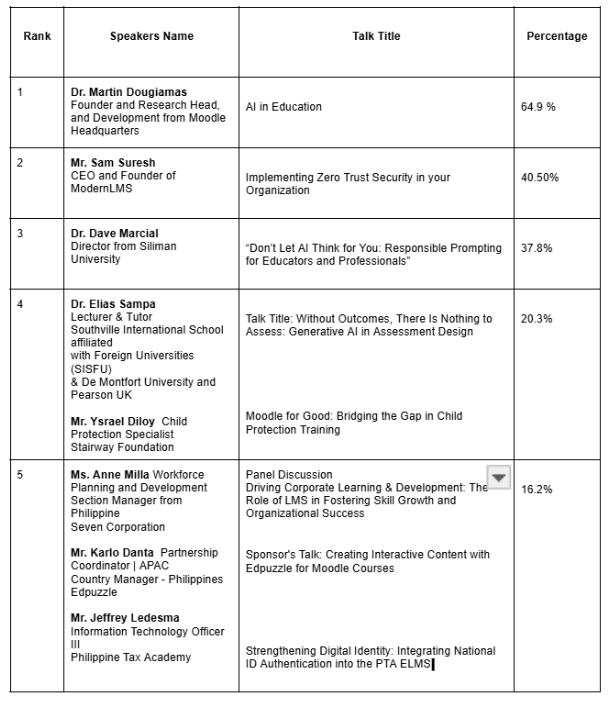
Sam Suresh presented his second talk, “Zero Trust Security Implementation,” which was rated as one of the best talks, second only to the session by the Moodle founder;
AI in Moodle Quiz Generation: Dr. Reinald Adrian Pugoy
Workshop Room 1 on Day 1 hosted a session on Artificial Intelligence by Dr. Reinald Adrian Pugoy, Associate Professor at the University of the Philippines Open University and Director of its ICT Development Office.
Dr. Pugoy presented research titled ‘From Prompt to Import: How Seamlessly Can Large Language Models Generate Moodle Quizzes?’ The study examined the feasibility of using Large Language Models (LLMs) to generate quiz content in formats directly compatible with Moodle — specifically, the Aiken and GIFT XML formats, which allow questions to be written in plain text and imported into the Moodle quiz activity.
The research demonstrated that LLMs can produce quiz content in these formats with a level of accuracy that meaningfully reduces the time required for manual question development. Three principal findings were presented:
LLMs can effectively support prompt-to-import Moodle quiz generation. The workflow from prompt to importable quiz file is more efficient than many practitioners may anticipate.
Contextual information improves output quality. Prompts that incorporate relevant subject matter documentation produce quiz questions that are more accurate and better aligned with learning objectives.
Human review of AI-generated content remains essential. Course creators should not import AI-generated quizzes without review. Educators need to validate questions before deployment as a necessary step in the workflow.
A question-and-answer session followed, during which participants shared practical experiences using AI tools in LMS workflows. Dr. Martin Dougiamas contributed observations on prompt construction and the increasing awareness of Moodle-specific structures in AI model outputs.
These insights directly apply to internal course development at ModernLMS, where training content creation — including quiz development — remains an ongoing operational responsibility. Dr. Pugoy’s AI-assisted quiz generation framework offers a structured approach to improving the efficiency of that process while maintaining content quality standards.
AI in Education: Dr. Martin Dougiamas, Moodle Founder
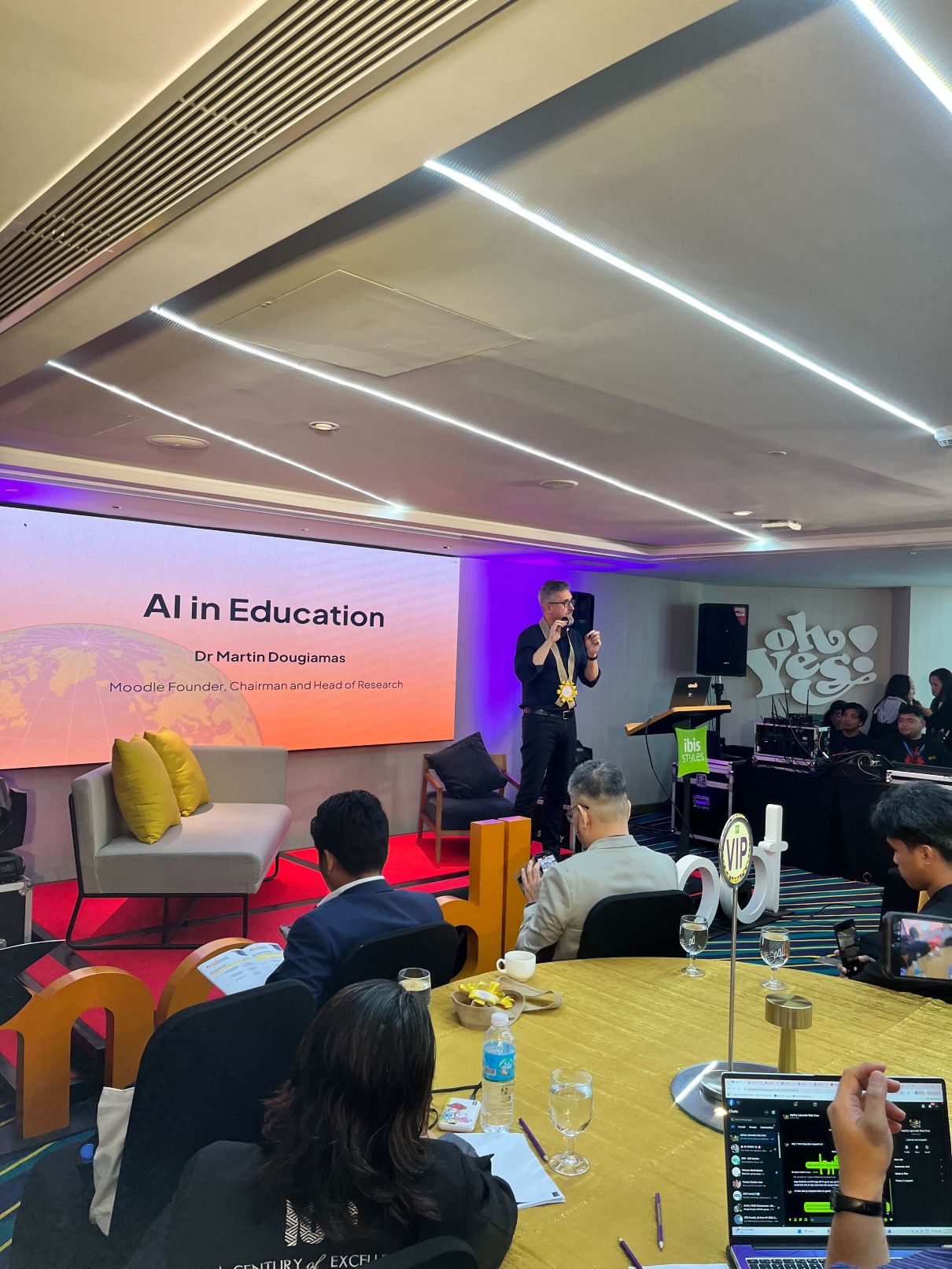
Dr. Martin Dougiamas, Founder of Moodle and Head of the Moodle Research Lab, delivered the headline keynote of MoodleMoot Philippines 2026. Dr. Martin addressed the topic of Artificial Intelligence in Education — covering the current state of AI development, its associated risks, and its implications for the future of learning.
Dr. Martin opened by introducing Moodlebot, an internal organisational knowledge tool developed by Moodle HQ that functions as a team resource, enabling staff to navigate institutional knowledge more efficiently. This example illustrated a practical application of AI working in support of people within an organisation.
Dr. Martin then outlined two distinct trajectories of AI development currently shaping the global landscape:
Corporate AI: characterised by speed, commercial prioritisation, and data surveillance, primarily serving the interests of large technology organisations.
Human AI: characterised by open-source development, data sovereignty, and the preservation of critical thinking — built to serve individuals and communities.
Dr. Martin acknowledged that AI remains in an early but rapidly accelerating phase, with AI systems now contributing to the development of subsequent AI models. He noted that public confidence in AI has declined as a result of visible errors and political complexities, and that stakeholders have recalibrated expectations following an initial period of high anticipation.
On the risks of AI, Dr. Martin raised foundational questions about model ownership, data governance, and the long-term societal effects of AI-mediated decision-making:
“What does democracy mean when everything has an algorithm?”
“When was the last time you watched a video or a show you WANTED to watch, or have you been fed recommendations?”
Dr. Martin presented two contrasting scenarios for the future. The first — a dystopian outcome — involves centralised AI control and widespread displacement of human labour, with economic incentives increasingly favouring AI over human employment. The second — a positive outcome — involves distributed AI models owned and governed by individuals and institutions, enabling people to focus on creative, relational, and meaningful work:
“We don’t have to work for money — maybe we do it as extra work, or if you want to.”
“You are not defined as your job. You are defined as a human being.”
Dr. Martin addressed the argument that AI will replace human workers across all sectors, identifying three categories of employment where human involvement remains both necessary and irreplaceable:
- Attention Economy (content creators, philosophers, and those drawing from lived experience)
- Statutory Economy (roles requiring a moral compass, such as judges)
- Experience Economy (performing artists, musicians, and those whose value is the human experience itself).
Turning to Moodle’s direction, Dr. Martin introduced a framework distinguishing work from learning:
A task constitutes Work when the primary goal is a high-quality output and the focus is on efficiency. A learner using AI to produce an assignment, for example, is engaging in work — not learning.
A task constitutes Learning when the goal is cognitive restructuring — a genuine change in how the learner understands or approaches a subject.
Within this framework, Dr. Martin identified three contexts in which AI can support genuine learning outcomes:
Practice Partner: AI used to simulate real-world scenarios, such as language practice or interview preparation.
Instant Feedback Loop: AI used to review and grade submitted work, enabling rapid iteration and self-correction.
Learn and Influence: AI applied in service of human development and societal benefit, rather than commercial interest.
Dr. Martin’s keynote provided a substantive and accessible treatment of AI’s implications for education — one that was notable for its clarity and its grounding in practical educational philosophy. The session was among the most discussed at MoodleMoot Philippines 2026.
Why Moodle and Why You Should Use a Partner: Max Espley, Moodle HQ
Max Espley, APAC Channel Partner Manager at Moodle HQ, delivered a session on the value of Moodle and the role of the global Certified Partner network. Mr. Espley brings over 25 years of experience in education and educational technology, spanning international sales, marketing, and strategic partnerships.
To contextualise Moodle’s value proposition for a Philippine audience, Mr. Espley opened with a deliberate cultural reference — using Chicken Adobo, one of the Philippines’ most iconic national dishes, as a metaphor for the Moodle platform. In this framework, the dish represents Moodle itself, while the individual ingredients — represent the developers, partners, and community members who contribute to its ongoing development and implementation. Moodle is not a proprietary product delivered to end users, but a platform shaped and sustained by a global community of contributors.
Mr. Espley proceeded to present Moodle’s worldwide network of Certified Partners — organisations that Moodle formally authorises, trains, and holds accountable for delivering Moodle implementations to the highest standard. The session highlighted the geographic reach of this network across multiple continents.
Moodle HQ featured ModernLMS among the recognised Moodle Certified Partners during this presentation, acknowledging ModernLMS’s standing within the global partner network. As Malaysia’s first Moodle Premium Certified Partner, this recognition reflects the quality and consistency of service that ModernLMS provides to clients across the region.
MoodleMoot Philippines Awards Night
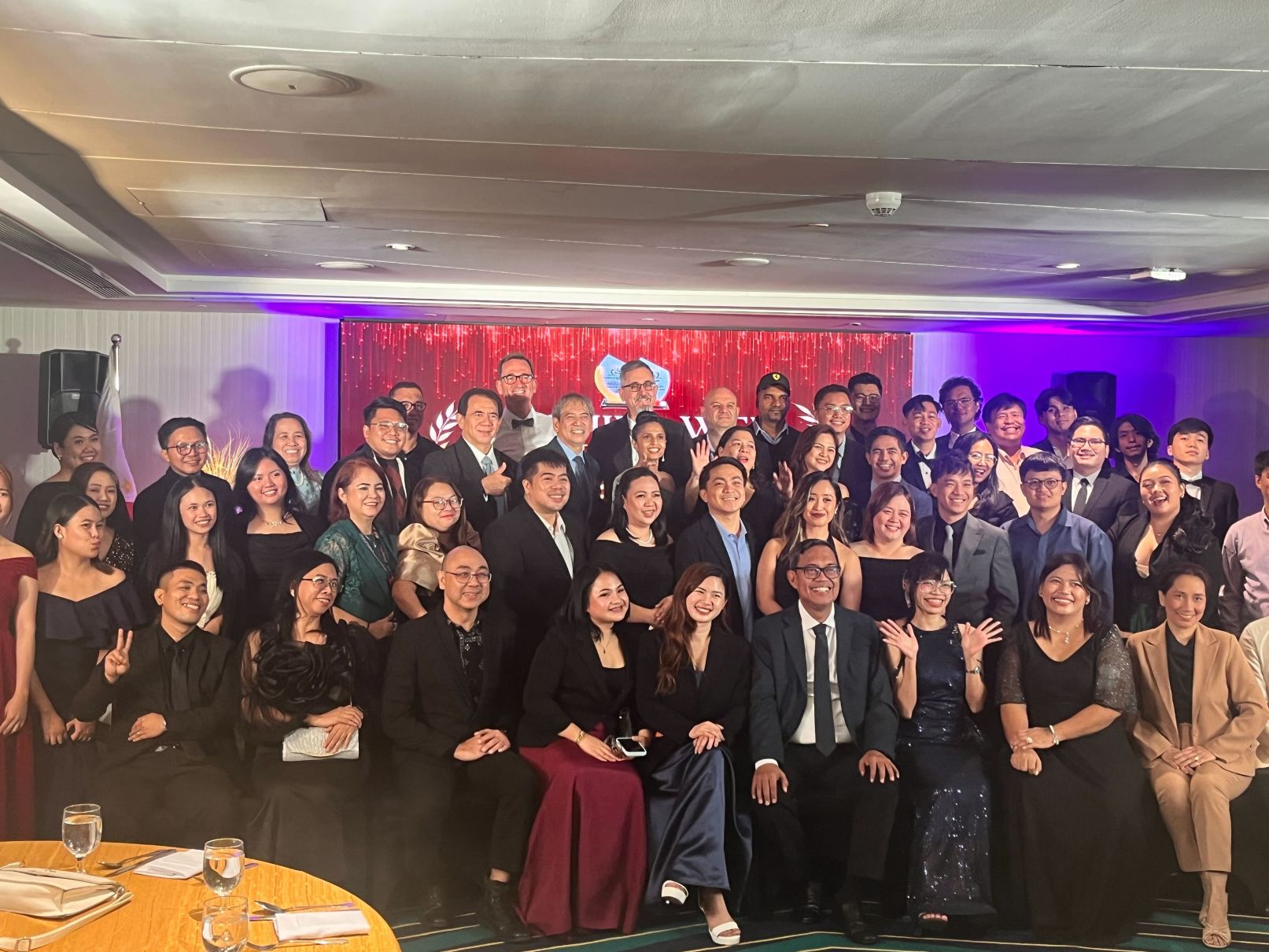
Following the close of the two-day conference programme, Nephila Web Technology Inc. hosted the MoodleMoot Philippines 2026 Awards Night at the event venue.
Guests attended the Gala Awards evening in formal attire. The event served as both a professional networking occasion and a formal recognition ceremony for outstanding contributions to the Moodle community in the Philippines and the wider region.
The awards recognised institutions on the basis of the scale and impact of their Moodle LMS implementations — including those with the highest number of active users on their platforms — as well as longstanding partners of Nephila Web Technology who have supported the growth and adoption of Moodle across the region.
ModernLMS attended the Awards Night as a participant in the broader MoodleMoot Philippines community. The ceremony underscored the depth of commitment among educational institutions and technology partners who have invested in open, quality learning infrastructure — and provided an opportunity to strengthen professional relationships across the regional Moodle network.
The future of education is being shaped by the conversations happening in rooms like these.
ModernLMS is Malaysia’s first Moodle Premium Certified Partner, dedicated to building effective learning environments for organisations across the region. To learn more, visit modernlms.com.